Currently Out Of Stock
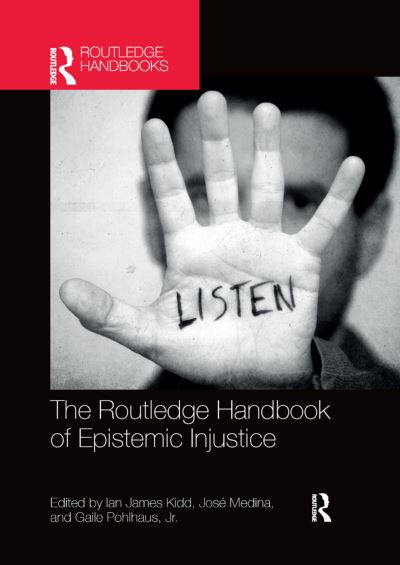
The Routledge handbook of epistemic injustice
Paperback
€75.39
Collect 226 Reward Points
- Currently Out Of Stock
- Book Synopsis
- In the era of information and communication, issues of misinformation and miscommunication are more pressing than ever. Epistemic injustice - one of the most important and ground-breaking subjects to have emerged in philosophy in recent years - refers to those forms of unfair treatment that relate to issues of knowledge, understanding, and participation in communicative practices.The Routledge Handbook of Epistemic Injustice is an outstanding reference source to the key topics, problems and debates in this exciting subject. The first collection of its kind, it comprises over thirty chapters by a team of international contributors, divided into five parts: Core Concepts Liberatory Epistemologies and Axes of Oppression Schools of Thought and Subfields within Epistemology Socio-political, Ethical, and Psychological Dimensions of Knowing Case Studies of Epistemic Injustice. As well as fundamental topics such as testimonial and hermeneutic injustice and epistemic trust, the Handbook includes chapters on important issues such as social and virtue epistemology, objectivity and objectification, implicit bias, and gender and race. Also included are chapters on areas in applied ethics and philosophy, such as law, education, and healthcare.The Routledge Handbook of Epistemic Injustice is essential reading for students and researchers in ethics, epistemology, political philosophy, feminist theory, and philosophy of race. It will also be very useful for those in related fields, such as cultural studies, sociology, education and law.
- Product Details
-
- ISBN
- 9780367370633
- Format
- Paperback
- Publisher
- Routledge, (11 September 2019)
- Number of Pages
- 456
- Weight
- 680 grams
- Language
- English
- Dimensions
- 246 x 248 x 28 mm
- Series:
- See all books in this series
- Categories:
- Criminal justice law Social and Medical Medicine and Nursing Social and political Ethics and morals Epistemology and theory of knowledge Postcolonial Sociology Gender studies and groups Ethnic studies Welfare and services Crime and criminology Political science and theory Philosophy and theory of education Educational strategies and policy