Fast & Free Shipping
Get FREE delivery in the Republic of Ireland when you spend €10 or more
Where does your family fit?
Mapping the reading experience of Irish children and families today
Our research
In 2025, Eason commissioned a large scale study on Irish family and children’s reading habits and experiences from Amárach. The research began with a series of in-home family interviews, and these were used to design questions for a larger online survey. A selection of 500 parents with primary school age children, from across the country were surveyed. All surveyed participants agreed that reading was at least “somewhat important” in family life.
From this research, we found most families who see reading as at least somewhat important fit into one of four archetypes.
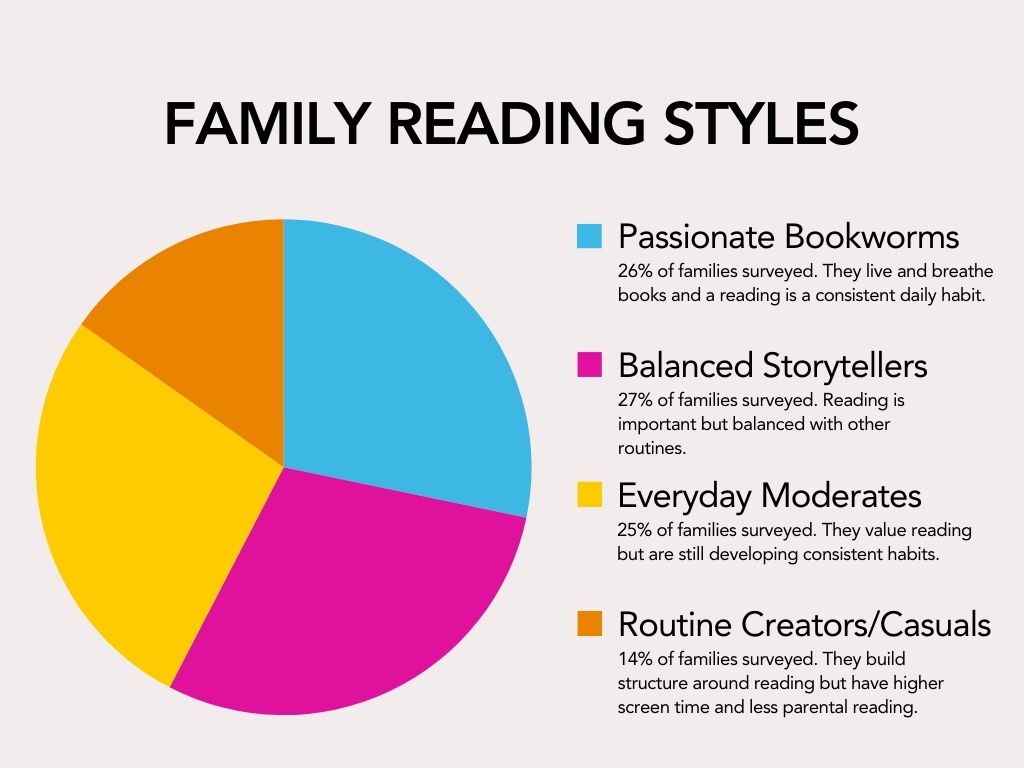
The family types
Our research identified four distinct family reading types.
26% of families were Passionate Bookworms
Passionate bookworm families live and breathe books. Reading is deeply embedded in daily life, often through bedtime rituals and shared reading moments. They advocate starting early and letting children explore genres they love.
-
Reading is extremely important
-
Families self-identify as avid readers
-
Parents read a lot and frequently
-
Children have low to medium screen time.
27% of families were Balanced Storytellers
Balanced Storyteller families integrate reading into everyday life - after meals, at bedtime, or through weekly book clubs. They value imagination and patience, and often use simple tools like picture books and themes to engage children.
-
Reading is important to extremely important
-
Families are avid to moderate readers
-
Parents read regularly but not obsessively
-
Low screen time for children.
25% of families were Everyday Moderates
Everyday Moderate families value reading but struggle with consistency. Their routines are sporadic, and their advice is often vague or aspirational, suggesting they’re still developing sustainable reading habits
-
Reading is important
-
Families are moderate readers
-
Parents read sometimes or a lot
-
Medium screen time for children
14% of families were Routine Creators / Casuals
Routine Creators / Casuals families are trying to build structure around reading despite competing demands and high screen time. They appreciate support on carving out specific slots and adapting to the child’s pace.
-
Reading is important but not central
-
Families are moderate to occasional readers
-
Parents read occasionally
-
High screen time for children.