Currently Out Of Stock
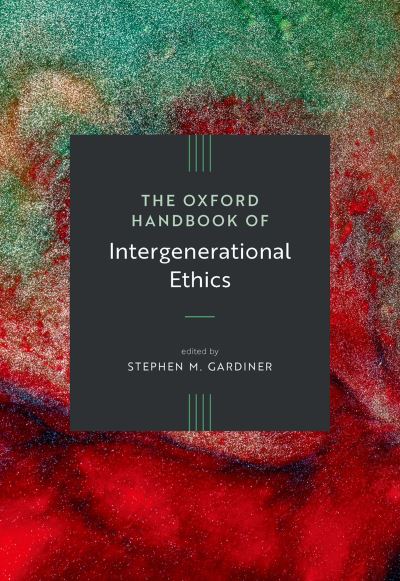
The Oxford handbook of intergenerational ethics
Hardback
€184.88
Collect 554 Reward Points
- Currently Out Of Stock
- Book Synopsis
- The philosopher John Rawls once said that "the question of justice between generations...subjects any ethical theory to severe if not impossible tests." This volume aims to illuminate those tests, indicate the progress made in resolving them, and take some steps of its own. It focuses on the increasing relevance of intergenerational ethics to key challenges of the 21st century, such as climate change, rapid technological change, the expanding human population, and threats of extinction. It features philosophers and political theorists of international standing, providing a cutting-edge perspective on these issues. Part A considers how intergenerational ethics should be understood from the point of view of leading contemporary moral and political theories, as well as approaches grounded in diverse cultural traditions. Topics include consequentialism, deontology, the ethics of care, contractualism, communitarianism, indigenous perspectives on ancestry, capabilities, republicanism, Buen Vivir, nonanthropocentrism, Confucianism, Maori philosophy, and African intergenerational ethics. Part B reflects on key concepts that structure public and academic discussions of intergenerational issues, such as sustainability, natural heritage, well-being, basic needs, meaning, and the threat of intergenerational tyranny. Part C addresses central issues that arise in intergenerational ethics. These range from key philosophical problems to how to understand political ideals to questions about the limits of appropriate concern. Chapters focus on areas such as: just savings principles, discounting in economics, duties to the past, the nonidentity problem, the repugnant conclusion, discursive justice, shaping intergenerational institutions, and whether to make threatening human extinction an international crime. Part D concludes by sampling topics that have a special importance in intergenerational affairs, such as pensions, inheritance, reparations, intergenerational debt, nuclear weapons, human population size, species conservation, and genetic enhancement of humans.
- About The Author
- Stephen M. Gardiner is Professor of Philosophy and Ben Rabinowitz Professor of the Human Dimensions of the Environment at the University of Washington, Seattle, where he is also Director of the Program on Ethics. He is the author of A Perfect Moral Storm: The Ethical Tragedy of Climate Change (2011), and co-author of Debating Climate Ethics (2016). His edited books include The Ethics of "Geoengineering" the Global Climate (2020), The Oxford Handbook of Environmental Ethics (2016), Climate Ethics: Essential Readings (2010) and Virtue Ethics: Old and New (2005). His latest book, Dialogues on Climate Justice (co-authored with Arthur Obst), tells the story of Hope, a fictional protagonist whose life is shaped by a series of conversations about ethics and justice in a climate-challenged world.
- Product Details
-
- ISBN
- 9780190881931
- Format
- Hardback
- Publisher
- Oxford University Press, (30 October 2025)
- Number of Pages
- 900
- Weight
- 1633 grams
- Language
- English
- Dimensions
- 239 x 191 x 63.5 mm
- Series:
- See all books in this series
- Categories: