A clear case for taxing the ultra-rich
Economist Gabriel Zucman sets out why billionaires can pay far less tax than ordinary workers and what can be done about it. A short, accessible manifesto focused on the rules that protect extreme wealth and how to change them.
Back In Stock Soon
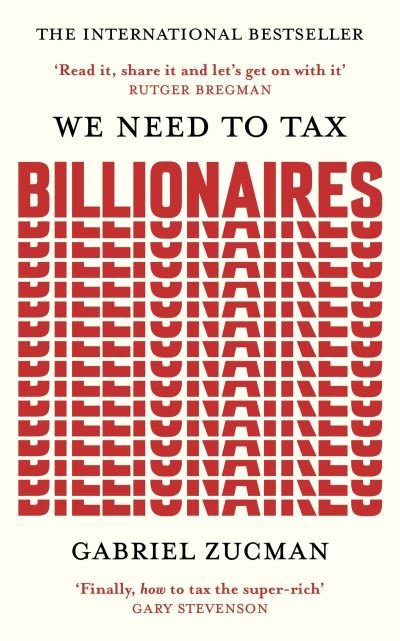
We Need to Tax Billionaires
Collect 43 Reward Points
- Expected back in stock
- Free Delivery On This Item
- Dispatched When Stock Arrives
A clear case for taxing the ultra-rich
Economist Gabriel Zucman sets out why billionaires can pay far less tax than ordinary workers and what can be done about it. A short, accessible manifesto focused on the rules that protect extreme wealth and how to change them.
- Book Synopsis
-
‘Finally, not just why but crucially how to tax the super-rich’ GARY STEVENSON
‘Read it, share it and let’s get on with it’ RUTGER BREGMAN
Why do billionaires pay less tax than you?
Billionaires often pay a lower income tax rate than nurses, teachers and almost everyone else – sometimes close to zero. This isn’t tax evasion, it’s the system.
In this explosive manifesto, Gabriel Zucman – the economist revolutionising the study of inequality – reveals how the ultra-rich dodge billions using havens, loopholes and political influence, while public services are breaking.
Until we understand the hidden rules that protect extreme wealth, inequality will keep rising and democracy will keep losing. This game-changing book finally shows us how making the ultra-rich pay their fair share is possible, and why now is the moment.
Ideal for readers who…
- Have been following the G20 wealth tax debate and want to understand where it came from — Gabriel Zucman is the economist whose research put the 2% minimum wealth tax proposal on the G20 agenda. This is the book behind the policy debate, written by the person who did the numbers.
- Want the economics, not just the outrage — this isn't a polemical journalist's take on inequality. Zucman is a John Bates Clark Medal-winning economist whose research on hidden wealth and tax avoidance is published in the world's leading academic journals. The anger in this book is grounded in data, which makes it considerably more useful than most books on this subject.
- Read The Trading Game by Gary Stevenson or Rutger Bregman's Moral Ambition and want to go deeper — both Stevenson and Bregman endorsed this book specifically. If you found those books opened questions you wanted answered more technically, Zucman provides the mechanism, not just the argument.
- Are curious why billionaires pay less tax than nurses — and how that is legal — the answer is not tax evasion. Zucman explains the structural reasons why the current system produces this outcome, which is more clarifying and more troubling than a simple story about cheating would be.
- Want something short, dense, and actually finished in an evening — at under 60 pages this is closer to a policy pamphlet than a full economics text. It makes one clear argument, supports it with evidence, and proposes a specific solution. It does not overstay its welcome.
- Are interested in whether any of this could actually happen — Zucman is not writing a wish list. His 2% minimum wealth tax proposal has already been supported by the French and Brazilian governments, discussed at G20 level, and sparked a parliamentary vote in France. The question this book answers is not whether it is desirable but whether it is achievable — and his answer is yes.
- About The Author
- Gabriel Zucman is a professor of economics at the Paris School of Economics, Summer Research Professor at the University of California, Berkely and founding director of the International Tax Observatory. He previously taught at the London School of Economics. Zucman is the author two books, The Triumph of Injustice and The Hidden Wealth of Nations. He has received numerous awards including the John Bates Clark Medal of the American Economic Association, awarded to the economist under the age of forty who is judged to have made the most significant contribution to economic thought and knowledge.
- Product Details
-
- ISBN
- 9781399839600
- Format
- Paperback
- Publisher
- Basic Books, (21 May 2026)
- Number of Pages
- 64
- Weight
- 76 grams
- Language
- English
- Dimensions
- 176 x 106 x 12 mm
- Categories: