In Stock
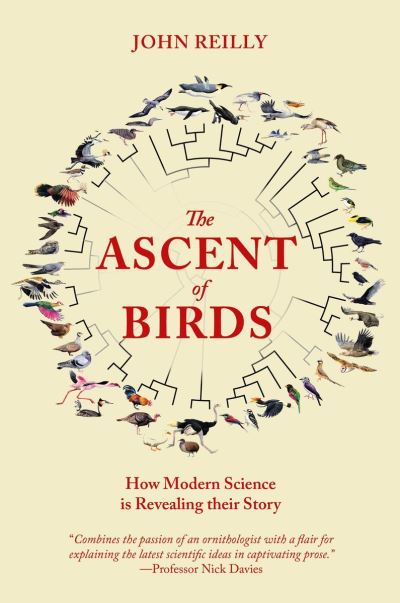
The ascent of birds
Paperback
€31.90
Collect 95 Reward Points
- Free Delivery from
- This Book Is Available Online Only
- Book Synopsis
- When and where did the ancestors of modern birds evolve? What enabled them to survive the meteoric impact that wiped out the dinosaurs? How did these early birds spread across the globe and give rise to the 10,600-plus species we recognise today ― from the largest ratites to the smallest hummingbirds? Based on the latest scientific discoveries and enriched by personal observations, The Ascent of Birds sets out to answer these fundamental questions. The Ascent of Birds is divided into self-contained chapters, or stories, that collectively encompass the evolution of modern birds from their origins in Gondwana, over 100 million years ago, to the present day. The stories are arranged in chronological order, from tinamous to tanagers, and describe the many dispersal and speciation events that underpin the world's 10,600-plus species. Although each chapter is spearheaded by a named bird and focuses on a specific evolutionary mechanism, the narrative will often explore the relevance of such events and processes to evolution in general. The book starts with The Tinamou's Story, which explains the presence of flightless birds in South America, Africa, and Australasia, and dispels the cherished role of continental drift as an explanation for their biogeography. It also introduces the concept of neoteny, an evolutionary trick that enabled dinosaurs to become birds and humans to conquer the planet. The Vegavis's Story explores the evidence for a Cretaceous origin of modern birds and why they were able to survive the asteroid collision that saw the demise not only of dinosaurs but of up to three-quarters of all species. The Duck's Story switches to sex: why have so few species retained the ancestral copulatory organ? Or, put another way, why do most birds exhibit the paradoxical phenomenon of penis loss, despite all species requiring internal fertilisation? The Hoatzin's Story reveals unexpected oceanic rafting from Africa to South America: a stranger-than-fiction means of dispersal that is now thought to account for the presence of other South American vertebrates, including geckos and monkeys. The latest theories underpinning speciation are also explored. The Manakin's Story, for example, reveals how South America's extraordinarily rich avifauna has been shaped by past geological, oceanographic and climatic changes, while The Storm-Petrel's Story examines how species can evolve from an ancestral population despite inhabiting the same geographical area. The thorny issue of what constitutes a species is discussed in The Albatross's Story, while The Penguin's Story explores the effects of environment on phenotype ― in the case of the Emperor penguin, the harshest on the planet. Recent genomic advances have given scientists novel approaches to explore the distant past and have revealed many unexpected journeys, including the unique overland dispersal of an early suboscine from Asia to South America (The Sapayoa's Story) and the blackbird's ancestral sweepstake dispersals across the Atlantic (The Thrush's Story). Additional vignettes update more familiar concepts that encourage speciation: sexual selection (The Bird-of-Paradise's Story); extended phenotypes (The Bowerbird's Story); hybridisation (The Sparrow's Story); and 'great speciators' (The White-eye's Story). Finally, the book explores the raft of recent publications that help explain the evolution of cognitive skills (The Crow's Story); plumage colouration (The Starling's Story); and birdsong (The Finch's Story)
- About The Author
- Professor John Reilly is a retired physician, writer, traveller and birder. His fascination with evolution and its mechanisms began during his medical studies, after attending a series of lectures on human evolution. The resultant lifelong passion has taken him across the globe in search of mammals and birds with remarkable evolutionary stories to tell, including sightings of nearly half the world's bird species. In the late 1970s, he led several pioneering wildlife tours to Svalbard in the Arctic in search of polar bears and cetaceans. Subsequent encounters with iconic species - from the enigmatic platypus to the mountain gorilla and chimpanzee - have served as the inspiration for the chapters in this book. After earning degrees in biochemistry and medicine, John spent 25 years as a consultant haematologist. Alongside his clinical, teaching, and lecturing duties, he led a molecular research programme investigating the genetic origins of leukaemia and related blood disorders. He also served as editor of the British Journal of Haematology and authored more than 200 scientific papers in peer-reviewed journals. His previous books include Greetings from Spitsbergen (2009) and The Ascent of Birds (2018). He is married with two sons, and when not travelling, lives in Sheffield.
- Product Details
-
- ISBN
- 9781784272036
- Format
- Paperback
- Publisher
- Pelagic Publishing, (01 April 2019)
- Number of Pages
- 340
- Weight
- 600 grams
- Language
- English
- Dimensions
- 234 x 156 x 29 mm
- Series:
- See all books in this series
- Categories: