Fast & Free Shipping
Get FREE delivery in the Republic of Ireland when you spend €10 or more
In Stock
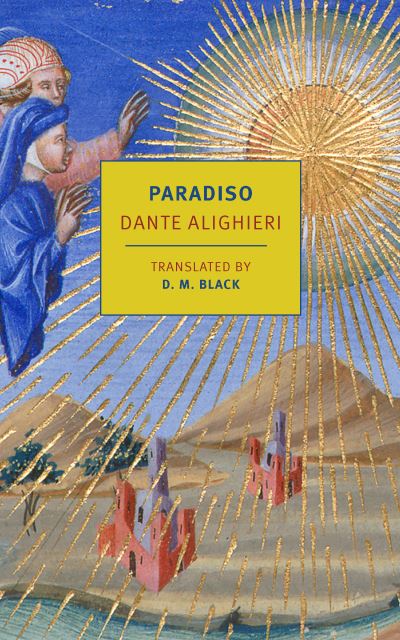
Paradiso
Paperback
€25.20
Collect 75 Reward Points
- Free Delivery from
- This Book Is Available Online Only
- Book Synopsis
- A new translation of the final part of Dante's Divine Comedy by a poet and psychoanalyst praised for his previous translation of Dante's Purgatorio. Paradiso is the most stylistically virtuosic book of the Divine Comedy**x2014;yet it is also the most underappreciated, due to readers' fears that it is boring and about "nothing but goodness." D. M. Black's clear and energetic new translation offers not only a glorious contradiction of such a view, but also, in highlighting the extraordinary beauty and sensorial richness of Dante's verse, proves that Paradiso is in fact "Dante's genius at its most indisputable" (Harold Bloom). Cleansed of sin and born anew after his grueling trek up Mount Purgatory, Dante's pilgrim leaves all that is earthly behind him as he makes his ascent through the celestial spheres. Under the guidance of his childhood sweetheart and lifelong muse Beatrice, he contemplates optics, angels, free will, justice, and love, to arrive at one of the most moving and ecstatic epiphanies in the history of literature**x2014;that God is "the Love that moves the Sun and all the stars." Written at a time of great political turmoil in Italy and great personal anxiety in Dante's life, Paradiso wrestles with many questions that have echoes in our own disturbing times. At its heart, it is a book about the shape of the universe and how to find one's place within it, composed with inventive daring and linguistic ingenuity as Dante stretches the Italian vernacular to its very limits, striving to make vivid and tangible the ineffable and sublime.
- About The Author
- Dante Alighieri (1265-1321) was born into a noble family in Florence and settled in Ravenna after being exiled due to a bitter feud in his home city. Celebrated as a poet from his youth, when he was among those whose writings in Italian were applauded for their "sweet new style," Dante was also an influential literary and political theorist. His most famous works are The New Life (circa 1293); De vulgari eloquentia (circa 1304-7), a defense of the use of the vernacular in literature; and his epic vision of the afterlife, The Divine Comedy, which he began in 1307 and finished shortly before his death. D. M. Black is the author of several poetry collections, including With Decorum, The Educators, The Happy Crow, and Gravitations. His work has been included in Penguin Modern Poets and British Poetry Since 1945 and he has written numerous articles on Scottish poetry. He is now a practicing psychoanalyst and his papers on psychoanalysis have been published (under the name David M. Black) in the International Journal of Psychoanalysis, British Journal of Psychotherapy, Journal of Consciousness Studies, and elsewhere. He translated Purgatorio for NYRB Classics. He lives in London.
- Product Details
-
- ISBN
- 9781681379432
- Format
- Paperback
- Publisher
- New York Review Books, (11 August 2025)
- Number of Pages
- 400
- Weight
- 367 grams
- Language
- English
- Dimensions
- 203 x 127 mm
- Categories: