In Stock
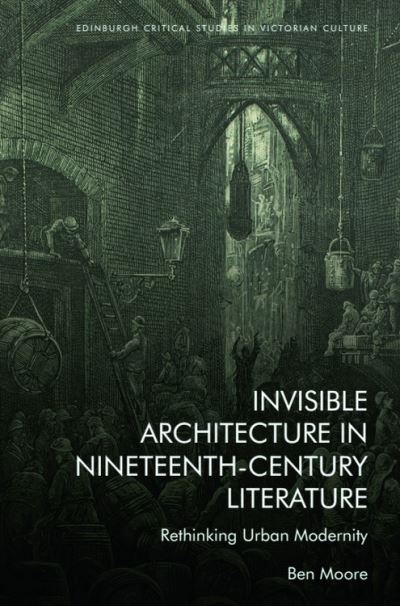
Invisible architecture in nineteenth-century literature
Paperback
€29.99
Collect 89 Reward Points
- Free Delivery from
- This Book Is Available Online Only
- Book Synopsis
- Ben Moore presents a new approach to reading urban modernity in nineteenth-century literature, by bringing together hidden, mobile and transparent features of city space as part of a single system he calls 'invisible architecture'. Resisting narratives of the nineteenth-century as progressing from concealment to transparency, he instead argues for a dynamic interaction between these tendencies. Across two parts, this book addresses a range of apparently disparate buildings and spaces. Part I offers new readings of three writers and their cities: Elizabeth Gaskell and Manchester, Charles Dickens and London, and Émile Zola and Paris, focusing on the cellar-dwelling, the railway and river, and the department store respectively. Part II takes a broader view by analysing three spatial forms that have not usually been considered features of nineteenth-century modernity: the Gothic cathedral, the arabesque and white walls. Through these readings, the book extends our understanding of the uneven modernity of this period.
- About The Author
- Ben Moore is Assistant Professor in English Literature at the University of Amsterdam. His research areas include nineteenth-century literature, cities, money, modernity, childhood and the human. He is the author of Human Tissue in the Realist Novel, 1850-1895 (Palgrave 2023) and Co-Editor of the Gaskell Journal. His work has appeared in journals including Victorian Literature and Culture, Modernism/modernity, Modern Language Review and the Journal of Victorian Culture, as well as in various handbooks and edited collections.
- Product Details
-
- ISBN
- 9781399508490
- Format
- Paperback
- Publisher
- Edinburgh University Press, (01 December 2025)
- Number of Pages
- 272
- Language
- English
- Dimensions
- 234 x 156 mm
- Series:
- See all books in this series
- Categories: