Fast & Free Shipping
Get FREE delivery in the Republic of Ireland when you spend over €10
Currently Out Of Stock
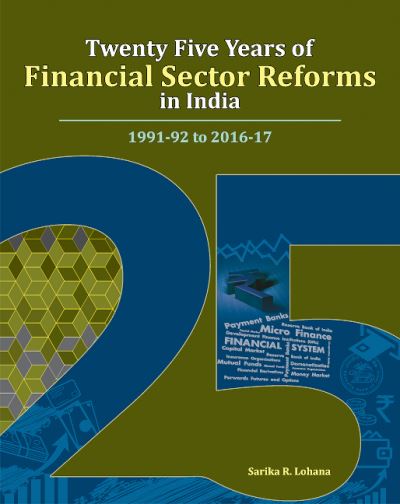
Twenty Five Years of Financial Sector Reforms in India
Hardback
€154.24
Collect 462 Reward Points
- Currently Out Of Stock
- Book Synopsis
- A modern economy, characterised by acute specialisation and exchange, is unthinkable without financial intermediaries, financial markets and financial instruments. Developing appropriate financial institutions and financial markets is a pre-requisite for speedy economic growth. Soon after Independence in 1947, Government of India followed a policy of social control of important financial institutions. The nationalisation of the Reserve Bank of India (RBI) in 1948 marked the beginning of this policy. This was followed by the takeover of the then Imperial Bank of India in 1956 which was rechristened as State Bank of India (SBI). In 1956 also, 245 life insurance companies were nationalised and merged into the newly created Life Insurance Corporation of India (LIC). In another significant development, Government nationalised 14 major commercial banks in 1969. The year 1972 saw the nationalisation of general insurance companies and the setting up of General Insurance Corporation (GIC). In 1980, 6 more commercial banks were nationalised and brought under public ownership. As a result of state domination, Indias monetary and financial system was characterised by barriers to entry, control over pricing of financial assets, high transaction costs and restrictions on movement of funds from one market segment to another. It was in this backdrop that wide-ranging financial sector reforms were introduced as an integral part of the economic reforms programme started in early 1990s. These reforms have paved the way for integration among various segments of the financial system. It is widely accepted that reduction/removal of financial repression has enhanced the efficiency and potential growth of the Indian economy. Financial sector reforms since the early 1990s have focused on the following objectives: (a) elimination of segmentation across various markets in order to facilitate transmission of impulses across markets, (b) easing the liquidity management process and (c) making allocation of resources more efficient across the economy. To achieve the above objectives, restrictions on pricing of assets have been removed along with the introduction of new instruments. Technological infrastructure has also been strengthened. The general approach to financial sector reforms has been a transparent, collaborative and consultative process aimed at resolving many possible dilemmas. The reform process itself has been characterised by caution with a tilt towards preserving stability, careful sequencing of measures, mutually reinforcing monetary initiatives and ensuring consistency and complementarity with other policies. The present book explains and examines at length the changes which have swept Indias financial sector since 1991. The book contains 35 chapters organised into 4 theme parts.
- About The Author
- Dr. Sarika R. Lohana is Post-Doctoral Research Fellow, State Bank Institute of Leadership, Kolkata. She has around 13 years of teaching and research experience. She is the recipient of UGC-Dr. Radhakrishnan Post-doctoral Fellowship, New Delhi and completed her M.Com. from SRTM University, Nanded; M.Phil. in commerce from Alaggappa University, Karaikudi; Ph.D. from the School of Commerce and Management Sciences, SRTM University and MBA in finance from Indira Gandhi National Open University (IGNOU), New Delhi. Besides, she has authored three books, the recent one being annotated by Journal of Economic Literature of Economic Association of America and reviewed by the Prime Minister of India. She is a member of WASET, USA and has case study publications in The Case Centre, UK and in ABDC Journals. Her areas of research include finance, consumer behaviour, entrepreneurship, banking, corporate finance, machine learning, cyber security, and neuro and behavioural finance. She was nominated by NITI Aayog as a subject expert for content development for the course, Understanding Digital Payments. She has also worked as an adjunct faculty at IIIT, Kottayam. She has completed certification in Corporate Finance from IESE Business School, Spain; Sustainability through Digital Transformation from SAP, Germany and High Availability and Disaster Recovery with the SAP HANA Platform from SAP, Germany. She is also the guest editor for few reputed international journals.
- Product Details
-
- ISBN
- 9788177084528
- Format
- Hardback
- Publisher
- New Century Publications, (02 August 2017)
- Number of Pages
- 402
- Weight
- 1115 grams
- Language
- English
- Dimensions
- 250 x 190 x 36 mm
- Categories: