In Stock
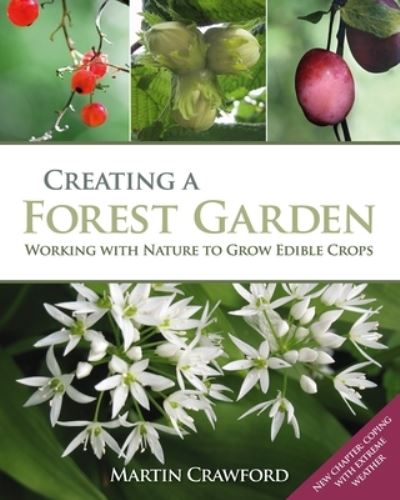
Creating a forest garden
Paperback
€36.00
Collect 108 Reward Points
- Free Delivery from
- This Book Is Available Online Only
- Book Synopsis
- Forest Gardening (or agroforestry) is a way of growing edible crops with nature doing most of the work. A forest garden imitates young natural woodland, with a wide range of crops grown in vertical layers. Species are chosen for their beneficial effects on each other, creating a healthy system that maintains its own fertility, with little need for digging, weeding or pest control. The result of this largely perennial planting is a tranquil, beautiful and productive space. This book is a bible for permaculture and forest gardening, with practical advice on how to create a forest garden, from planning and design to planting and maintenance. It explains how a forest garden is designed from the top down: the canopy layer first, then the shrub layer, the perennial ground-cover layer, the annuals & biennials next, the climbers and nitrogen fixers and finally the clearings, living spaces and paths. Whether in a small back garden or in a larger plot, the environmental benefits of growing this way are great. Forest Gardens are a viable solution to the challenge of a changing climate: we can grow food sustainably in them without compromising soil health, food quality or biodiversity. Forest gardens: store carbon dioxide in the soil and in the woody biomass of the trees and shrubs. enable the soil to store more water after heavy rains, minimizing flooding and erosion. boost the health of the ecosystem, ensuring a balance of predators and beneficial insects because mixed planting is crucial to the scheme. allows the soil to thrive because it is covered with plants all year round. Creating a Forest Garden includes a detailed directory of over 500 trees, shrubs, herbaceous perennials, annuals, root crops and climbers. As well as more familiar plants such as fig and apple trees, blackcurrants and rosemary shrubs, you can grow your own chokeberries, goji berries, yams, heartnuts, bamboo shoots and buffalo currants. Forest gardens produce fruits, nuts, vegetables, seeds, salads, herbs, spices, firewood, mushrooms, medicinal herbs, dye plants, soap plants, and honey from bees. This book tells you everything you need to create your own forest garden with beautiful illustrations and helpful tips throughout.
- About The Author
- "Martin is a true pioneer and his work deserves respect and celebration." - Permaculture Magazine "Martin Crawford is a frontiersman, a pioneering teacher and an inspiration. Both his work and his garden are national treasures." - Chris Nichols, Director of the Ashridge MSc in Sustainability and Responsibility. Martin started his working life a computer programmer but his passion for organic gardening quickly led to a change in career. He has had broad and varied horticultural/agricultural experience over the last 25 years - he has worked for the Yarner Trust in North Devon, teaching small-scale organic agriculture; grown food for a small hotel on the Isle of Iona; restored the walled gardens of a manor house in mid-Devon; and run his own organic market garden and tree nursery in South Devon. His experience led him to the concept of forest gardening as a sustainable system that can flourish in our changing climate conditions, and it was this that led to the founding of the Agroforestry Research Trust in 1992, a non-profit-making charity that researches into temperate agroforestry and all aspects of plant cropping and uses, with a focus on tree, shrub and perennial crops. At his 2-acre forest garden in Dartington, Devon, planted 15 years ago, Martin systematically researches plant interactions and unusual crops. He also runs a commercial tree nursery specialising in unusual trees and shrubs, and has an 8-acre trial site, researching fruit and nut trees. Martin teaches courses on Forest Gardening and Growing Nut Crops, writes books and edits a quarterly journal, Agroforestry News. His book Creating a Forest Garden - the forest gardening 'bible' - was published in 2010. His other books include Cherries: Production and Culture, Directory of Apple Cultivars, Directory of Pear Cultivars, Peaches and Apricots, Plums: Production, Culture and Cultivar Directory, Currants and Gooseberries, Blackberries and Raspberries, Chestnuts: Production and Culture, Hazelnuts: Production and Culture, Walnuts: Production and Culture, Bamboos, Ground Cover Plants, Nitrogen-fixing Plants for Temperate Climates, Timber Trees for Temperate Climates, Edible Plants for Temperate Climates,Useful Plants for Temperate Climates, Plants for Hedging, Plants for Basketry, Bee Plants and Dye Plants. His latest book, How to Grow Perennial Vegetables, was published in 2012. He is a director of 'Gaia', a Trust formed by James Lovelock to further his work. He lives in Dartington with his wife and two children. See www.agroforestry.co.uk for more information.
- Product Details
-
- ISBN
- 9780857845535
- Format
- Paperback
- Publisher
- Green Books, (05 May 2022)
- Number of Pages
- 384
- Weight
- 1550 grams
- Language
- English
- Dimensions
- 275 x 220 x 30 mm
- Categories: