Fast & Free Shipping
Get FREE delivery in the Republic of Ireland when you spend over €10
In Stock
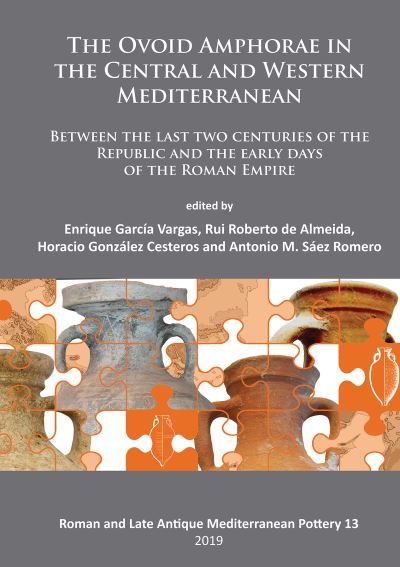
The Ovoid Amphorae in the Central and Western Mediterranean
Paperback
€94.25
Collect 282 Reward Points
- Free Delivery from
- This Book Is Available Online Only
- Book Synopsis
- The production of amphorae and the export of commodities transported in them was a key activity for the Mediterranean world in Antiquity. Consequently, their study is of enormous value for analysing the agricultural and fishing economy, and also the commercial mechanism of that period. Through the typological and chronological analysis of these ceramic containers, a high degree of knowledge has been achieved, especially for the production of the different Mediterranean societies from the second millennium BC to the Middle Ages. In The Ovoid Amphorae in the Central and Western Mediterranean between the last two centuries of the Republic and the early days of the Roman Empire, several series of amphorae created in the Late Republican Roman period (2nd and 1st centuries BC) have been studied - a group of material until now little studied. All of these groups of containers share a common feature in the shape of their bodies which is generally ovoid. The fact that they were conceived and developed in the economic and political context in which Rome expanded throughout the Mediterranean, transferring to its new territories its production and commercialization procedures, bears witness to the almost total integration of the Mediterranean markets. This publication is based on the proceedings of the workshop held at Seville University in December 2015. The book brings together contributions on the main production areas of these ovoid amphorae from the Atlantic to the Greek mainland / North Peloponnese, analysing in detail the origins, evolution and disappearance of their main series. It also includes case studies that are particularly relevant in relation to their distribution, consumption patterns, contents and relationship with other groups of amphorae manufactured in the Roman Imperial era. The aim of this publication has been to present an updated and complete synthesis of the so-called ovoid amphorae, from an interdisciplinary, international and diachronic standpoint.
- About The Author
- Enrique Garcìa Vargas (PhD History, University of Seville) is Lecturer at the University of Seville. Currently, he co-leads the Tomares Treasure Project, on a huge coin hoard buried near Seville during the first decades of the 4th century AD. Rui Roberto de Almeida holds a Master's degree in Archaeology and is currently developing his PhD research and thesis on maritime food trade from the Guadalquivir valley to Lusitania during the Roman era (I century BC - VI AD)'. Horacio González Cesteros (PhD Archaeology, University of Tarragona and the Catalan Archaeological Institute) is a member of the research staff of the Austrian Archaeological Institute. Antonio Sáez Romero (PhD Archaeology, University of Cadiz) is Assistant Professor at the University of Seville (Spain) and has been part or directed several research projects in Gibraltar, Portugal, Morocco, Italy and Greece.
- Product Details
-
- ISBN
- 9781789692969
- Format
- Paperback
- Publisher
- Archaeopress Archaeology, (19 September 2019)
- Number of Pages
- 430
- Weight
- 1605 grams
- Language
- English
- Dimensions
- 297 x 210 x 23 mm
- Series:
- See all books in this series
- Categories: