Currently Out Of Stock
A new approach to human social evolution
Paperback
€78.29
Collect 234 Reward Points
- Currently Out Of Stock
- Book Synopsis
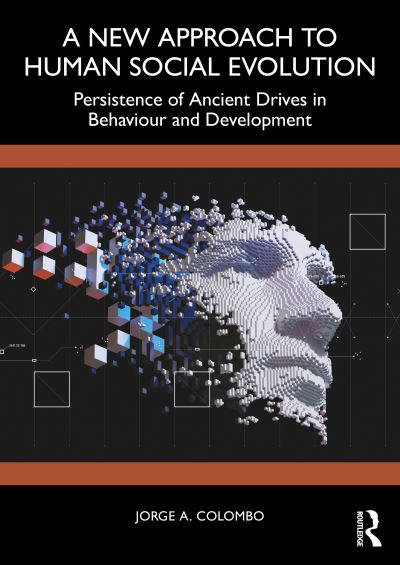
- This book provides an important examination into the role of evolution of human traits of dominance as central to understanding social and political events, proposing a new view on human social evolution. It also examines basic biological universal needs and behavioural profiles of non- human living beings, from which humans share essential survival components. It invites readers to think critically about the psychological evolution of the human brain. Using comparative psychology, it argues that the core of human behaviour lies in the ancient, animal, universal set of survival resources hidden under various socialization profiles. However, it generally fails to replace drives of dominance and aggression for physical and social survival. Genuine replacement of those primal behavioural drives would require fundamental neuro- socio- behavioural changes. This book supports the thesis that without education and the promotion of universal values involving environmental protection and individual opportunities to evolve, there will be negative consequences for individuals and communities. This book represents a critical tool for students of behavioural sciences, anthropology, politics, and evolutionary neurosciences, and will also greatly benefit other readers, such as teachers and professional researchers.
- About The Author
- Jorge A. Colombo, MD, PhD is a former Full Professor at the University of South Florida (USA) and Principal Investigator at the National Research Council (CONICET, Argentina). He is also a former fellow of several international organizations, including NIH (USA), von Humboldt Foundation (Germany), DAAD (Germany), and the British Royal Society.
- Product Details
-
- ISBN
- 9781032951188
- Format
- Paperback
- Publisher
- Routledge, (17 February 2025)
- Number of Pages
- 124
- Weight
- 260 grams
- Language
- English
- Dimensions
- 246 x 174 mm
- Categories: