Fast & Free Shipping
Get FREE delivery in the Republic of Ireland when you spend €10 or more
In Stock
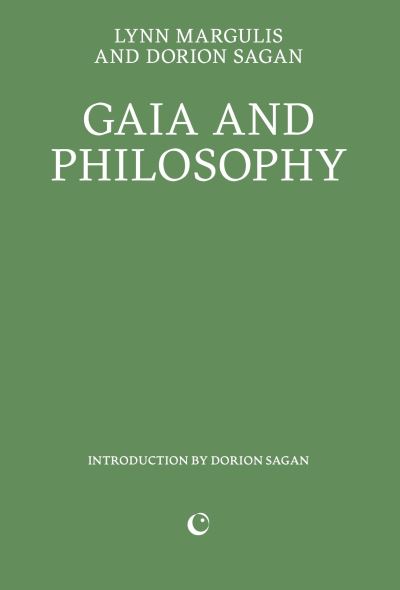
Gaia and Philosophy
Paperback
€8.79
Collect 26 Reward Points
- Standard Delivery from
- This Book Is Available Online Only
- Book Synopsis
- In the 1970s, microbiologist Lynn Margulis and atmospheric chemist James Lovelock developed the Gaia theory. Embracing the circular logic of life and engineering systems, the Gaia theory states that Earth is a self-regulating complex system in which life interacts with and eventually becomes its own environment. Gaia describes a living Earth: a body in the form of a planet.Fusing science, mathematics, philosophy, ecology and mythology, Gaia and Philosophy, with a new introduction by Dorion Sagan, challenges Western anthropocentrism to propose a symbiotic planet. In its striking philosophical conclusion, the revolutionary Gaia paradigm holds important implications not only for understanding life's past but for shaping its future.
- About The Author
- Lynn Margulis (1938-2011) was an interdisciplinary evolutionary biologist, author and educator. She was the primary intellectual force in the 20th and early 21st century responsible for the acceptance of the role of symbiogenesis (of archaea and bacteria) played in the evolution of the eukaryotic cells (cells with nuclei) that became plants, animals, and fungi. She also, by underscoring the roles of gas-exchanging bacteria, helped turn James Lovelock's Gaia hypothesis that the reactive gases of Earth's atmosphere were physiologically regulated by life away from thermodynamic equilibrium, into a full on theory. Her books, often written in collaboration with her son Dorion Sagan, include Microcosmos: Four Billion Years of Evolution from Our Microbial Ancestors (1987), Mystery Dance: On the Evolution of Human Sexuality (1991) and Slanted Truths: Essays on Gaia, Symbiosis, and Evolution (1997).
- Product Details
-
- ISBN
- 9781739371760
- Format
- Paperback
- Publisher
- Spiral House Editions, (01 September 2024)
- Weight
- 67 grams
- Language
- English
- Dimensions
- 160 x 161 x 7 mm
- Categories: